

How Do You Say Thank You For Your Service
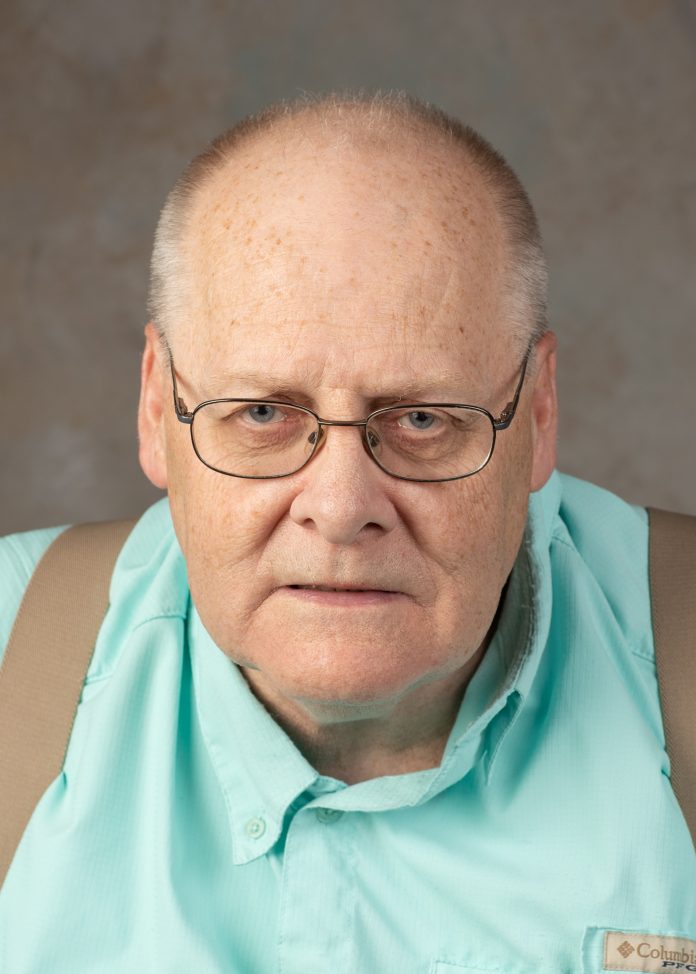
By Greg Markley
For maybe xv years, but especially since 2017, controversy has swirled effectually a simple saying: "Cheers for your service." It is said to a service fellow member or armed services veteran with gratitude. The issue arose not from civilians but from military people themselves. It merely happened; like deciding to suddenly enlist for one'due south country.
As Pvt. John Winger (Bill Murray) said in 'Stripes,' "We're all very, very unlike. Just there is ane thing we all have in common: we were all stupid enough to enlist in the Army (or another branch). At that place's something seriously wrong with us – we're soldiers. But we're American soldiers! Nosotros're ten and one!"
This was a humorous way to describe the close-knit grouping of men and women who accept worn a military machine uniform. Also, Winger refers to the disastrous Vietnam War, which ended with more than 50,000 American deaths. Most historians tag that state of war a U.South. loss (thus the "ten and 1"). Soldiers returning from Vietnam would take been happy to receive even a weak welcome such as "Thanks for your service." Instead, people irate over the state of war threw things at them and called them "baby killers." At that place are valid, appropriate reasons for either side—the anti-"Cheers's" and the pro-"Thanks's."
"Most SEALs don't wear their uniform out in public, and so we don't really become thanked for our service," a Navy Footling Officer told San Diego Magazine in 2017. "If yous're looking for thanks then you're in the wrong job, because people shouldn't know what nosotros practise. I don't do this for the acknowledgment or the coin—it's about serving my country."
Another view came from a Navy Master Chief: "It'due south important for civilians to understand that our response is just equally heartfelt when we say 'Cheers for your support' in return. I hope they feel our sense of gratitude besides. Without their support on the homefront and appreciation of the values that our land stands for, why else would we volunteer our service?"
Simply ii months agone on Veterans Solar day 2019, a poll showed that 49% of veterans would prefer not to be thanked. The poll was conducted by Cohen Veterans Network, a national not- for-turn a profit of mental wellness clinics for post 9/11 vets and military families. Polled were two,019 U.S. adults ages 18 and older, 218 who are U.Southward. war machine veterans or active duty service members.
Still it was not all bleak news from the Cohen poll. It turns out that a majority of the veterans and active-duty service members polled would not object if a civilian asked them
"When did yous serve?" (71% in favor); "Where were yous stationed?" (Also 71% for); or "What was your job while serving?" (73% for).
A 2017 commodity past Dr. Michael Brennan in Psychology Today featured a list of four reasons why veterans and active-duty military members oppose the maxim "Cheers for your service."
Brennan is acquaintance clinical director of the Route Abode program for Veterans at Rush Medical Center based in Chicago.
"Get-go, those who believe this say it could 'trigger' someone to have an emotional reaction," said Brennan. "This might mean someone would get angry or irritated "You don't know what I've done." respond reactively "Y'all don't know what I have been through." or question your intent "Why would you say that?"
Other rationale against the proverb include that Vietnam veterans may accept had a poor return home that withal upsets them; that with a volunteer versus a draftee there may be challenges to the phrase; and that a amend option is maxim "Thank you for your willingness to serve," "Welcome domicile," or "Thank you for your cede."
Those three choices above sound practiced, just "Welcome Dwelling house" is the weakest. Why?
Because it is similar saying "Have a nice day." It is rote and has lost any meaning. My business organization with "thanks for your service" is that it sounds like a cop-out. That is something you might say when a person, through no fault of their own, loses a job. Someone unfeeling might offer:
"Thank you for your service—you worked great, just the shop folded up just the same."
In the end, most people who say "Cheers for your service…" are well-intended, peradventure more than so in the gracious Southern U.Due south. Then, if veterans answer nicely, all involved volition get used to the approach and reply that the other person prefers. Skillful advice came from Gen. George S. Patton: "Say what you hateful and hateful what y'all say."
Greg Markley has lived in Lee Canton for 18 of the terminal 23 years. An award-winning journalist, he has main's degrees in instruction and history. He has taught as an adjunct in Georgia and Alabama.

How Do You Say Thank You For Your Service,
Source: https://opelikaobserver.com/thank-you-for-your-service-is-okay-by-me-but-i-understand-why-alternatives-are-sought/
Posted by: boydflid1954.blogspot.com
0 Response to "How Do You Say Thank You For Your Service"
Post a Comment